Rita Walker (Blog Twenty-two):  By Dan Watt and Taylor Norris

Rita Walker (Blog Twenty-two):  By Dan Watt and Taylor Norris

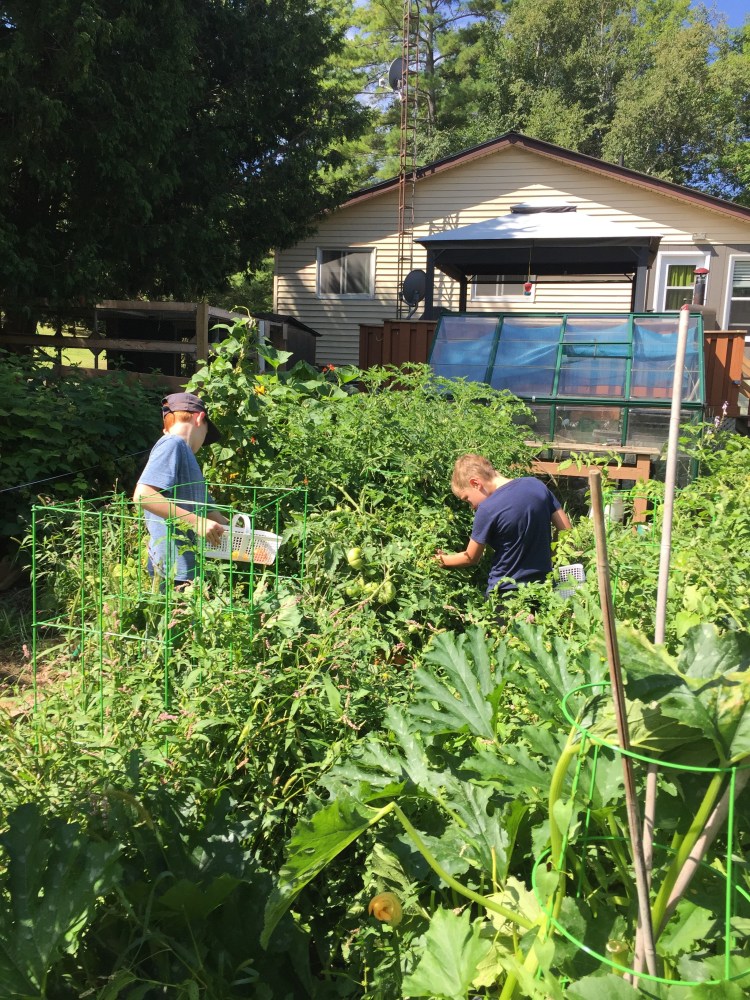
I made an open bin with plywood to throw in food scraps, dog poop and occasionally leaves.  Every so often I throw soil on top.  Over the years when I turned the mixture over with a shovel I found it full of earthworms and that the mixture had turned into soil.

https://www.intechopen.com/books/sustainability-of-agroecosystems/activity-and-variety-of-soil-microorganisms-depending-on-the-diversity-of-the-soil-tillage-systemhttp://www.fao.org/3/a0100e/a0100e05.htmhttps://www.gardenmyths.com/what-is-humus/https://www.sciencedirect.com/science/article/abs/pii/S0140196313002176

https://askabiologist.asu.edu/explore/desert-microbes

http://mgeldorado.ucanr.edu/files/170168.pdf

The classroom has a new student, the girl who lit the candle without a match or lighter.  The one who was arguing in the woods with Kanayago.  She’s sitting to the right of Marlo who looks much better.  Meanwhile Kanayago is sitting at the desk on the other side of Marlo.  It’s interesting that all the elementals are sitting beside each other.  On Kanayago’s desk she notices a small cardboard box.  She looks for any reaction in Kanayago’s face that she knew it was her as the rat and then the chipmunk but the girl shows no curiosity.

“Can you tell us your name?” Rita says to the new girl.

“Ember,” the girl replies in a tired voice.

“Today’s lecture is on microorganisms,” Rita begins.  She clicks on the projector where the screen is partitioned into five sections.  Each section has a picture and a heading for the images of bacteria, fungi, viruses, protozoa, and algae.  “Bacteria and fungi are the main microorganisms that ingest the dead material.

“All these microorganisms,” Rita continues, “break down dead organisms into CO2 and minerals.  I’m condensing this so you’ll need to read about how complex this is.  What remains is called humus.   Humus is carbon based and can hold up to ninety percent of its weight in water.  Because it’s negatively charged it attracts ammonium and minerals such as calcium, magnesium, phosphorous and others.

“In deserts the main microorganism are cyanobacteria.   Cyanobacteria can desiccate so that it only contains 1-2% water.  It will remain inactive until there is more rain.  It is extremely important to get soil testing done before fertilizing.  Phosphate, Potassium, and Nitrogen have to be added carefully so that an excess of salt isn’t created which will damage microorganisms.  Next week’s lecture is on carbon engineering.”

Rita holds her breath as Kanayago walks up to her holding the box.

“I know we’re done talking about waste matter but I had a weird experience this weekend,” Kanayago tells her as she sets the box down on Rita’s lectern.   “I captured a strange looking rat.  I went to get something to keep it in.  When I came back the rat was gone and I thought I saw a chipmunk running away.  I guess the rat was so scared it defecated enough to escape.  I was just wondering if you could analyze the droppings.  Maybe I thought I saw a rat but it was actually a chipmunk.  Both looked–.”  Rita holds her breath as Kanayago searches for the right words.  “Familiar.”

Rita can’t stop herself from gulping.  “I’ll get it analyzed for you and let you know.”  She picks up the box very carefully.  The contents are a part of her.

Audio Interview with Bob Godglick of Considerate Done: Vintage Clock Repairs

Enjoy this Audio Interview with Bob Godlick as he discusses how he got into vintage clock repair and the different types of clocks he has worked on so far.

This slideshow requires JavaScript.


Chrysalids words and music by Dan Watt. Performed by Dave Flitton (singer) and Dan Watt (player)

via Chrysalids words and music by Dan Watt. Performed by Dave Flitton (singer) and Dan Watt (player)

The Process of drawing the Queen of Caelum cover by Randy Bugdale.

via The Process of drawing the Queen of Caelum cover by Randy Bugdale.

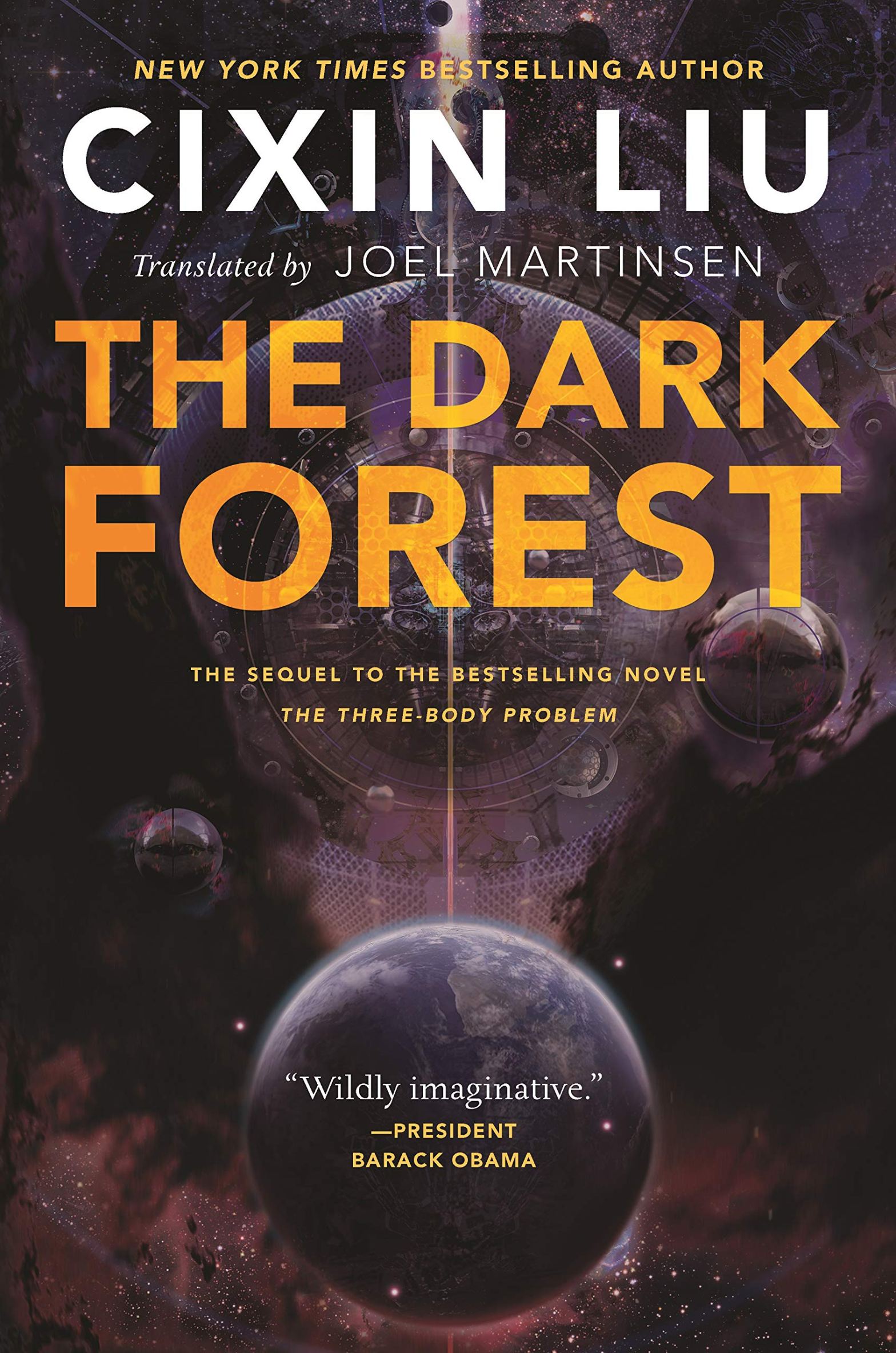
Review of Cixin Liu’s “The Three-Body Problem” translated by Ken Liu

A couple of weeks ago I decided I needed to take a break from working on my own stories and read someone elses.  As I walked down the aisles at Indigo’s in Cambridge (Canada) I came across an interesting title called “The Three-Body Problem” in the science fiction section.

This is a Hugo winning story for best science fiction originally written in Chinese and later translated into English and German.

After years of reading science, fantasy, and historical fiction along with other genres I didn’t think I could find something completely original to read.  Cixin Liu’s book caught my attention and held it until the end.  I’m not an astophycisist, nor an engineer, nor a mathematician so I am grateful he does an amazing job of explaining the sophisticated scientific concepts that run throughout the book.  There is also the fascinating matter of taking me on a journey through Chinese history and way of thinking.

Ken Liu sums up the book for those of us brought up in the West in the postscript of the book:  “The English words are arranged in such a way that the reader sees a glimpse of another culture’s pattern of thinking, hears an echo of another language’s rhythms and cadences, and feels a tremor of another people’s gestures and movements.”

A marvel of a story to read outdoors, or inside across from a  large bay window, where you can glance up at the stars.

D.W.

Liu Cixin:

Ken Liu

https://kenliu.name/


An Interview with Bill Ashwell, Co-author of a Great New Play called “Dark Sanctuary”

For anyone who missed my interview with Bill Ashwell, co-author of the play: Dark Sanctuary.

Interview with Bill Ashwell at the Blackwing Café, Cambridge Ontario, September 14, 2019.

After seeing the play Dark Sanctuary, co-written by my friend Bill Ashwell I enjoyed it so much that I asked him if I could interview him.  If you want to know more about Bill I’ve included his bio at the end.

I just saw Dark Sanctuary, a play you co-wrote with Steve Robinson, and got so immersed in it I completely lost track of time.  How did you first come up with idea for the play?

  • It came from possibly too many nights watching old film noir movies on TCM: The Big Sleep, Out of the Past, Chinatown

How long did it take to write the play?

  • Once Steve got me off my butt about writing, he and I had a first draft completed in about 3 months.

Because it’s a cloak and dagger play did it take a long time to make it flow properly?

  • In a sense, yes. We had to frequently tweak the characters and the back stories to give more of a sense of their motivations. There had to be a viable reason for Father O’Rourke to support Nicky the way he did. And Detective Widmark needed his own backstory to be what he was.

A lot of social issues are brought up during the play.  Was that intentional or did they implement themselves into the play as it evolved?

  • A bit of both, I think. The issues of Nicky’s homelife and Father O’Rourke’s internal struggles are real and in a sense timeless, so to speak. We just worked them into the story to expand beyond the simple noir-ish stereotypes

Why did you choose to have the play take place in 1952?

  • Simply, it fits with the film noir approach. But really, the time frame isn’t that much of a factor. Just sets the scene.

Some of the actors spoke with an Irish accent.  Was that intentional?

  • Again, it was all in keeping with the story. We wanted the archetypal characters; the kindly priest, the busybody house keeper, the hard-boiled police detective, without dwelling on the stereotypes, simplifying the characters to the point of parody. So the accents fit with the characters and, I suppose, vice versa.

I was very impressed with the choice of actors.  Were they asked or did you have auditions?

  • Mainly auditions. Steve put the call out and we auditioned quite a few local and area actors. I was quite impressed with the depth of talent in this area.

You’ve also written non plays.  Can you tell us about your other writing and if it is available or will be soon?

  • I began writing poetry waaaayy back in the ‘80s, but had no idea what to do with it of how to hone my craft. I stumbled across the Cambridge Writers Collective in 1995, a wonderful group of writers who taught me more about writing than I could have ever imagined. I have been fortunate enough to have had some of my work published and self-published.
  • Poetry taught me to bend the physical rules of writing, that expression of the idea is, in some way, more important than composition. I struggle with rhyming poetry (and don’t get me started on limericks), so free verse poetry became the vehicle by which I could effectively express myself.


Bill Ashwell has been a member of the Cambridge Writers collective (CWC) since 1995.  His poetry and prose have been published in several editions of CWC’s Writers Undercover Anthologies and The Cambridge Wartime Scrapbook.  In 2001 he published Moments of Clarity, a chapbook collection of his poetry.  In 2007 his work was published in the Ascent Aspiration Magazine’s: Aguaterra Anthology of poetry and fiction.  Also in 2007 he was awarded the City of Cambridge’s prestigious Bernice Adams Memorial Award for Communication and Literary Arts.  Bill has also participated in numerous public poetry readings, notably, at the Cambridge Arts Festival, the 2004 Remembrance Day Service at the Galt Cenotaph, and at various local celebrations of the spoken word.

You can reach Bill at:  bashwell@gmail.com or text him at:  226-218-1242


Caedar Writing & Artwork: Books by Author, Interviews, Guest Blogs, and more...'s avatarCaedar Writing & Artwork

Interview with Bill Ashwell at the Blackwing Café, Cambridge Ontario, September 14, 2019.

Bill Ashwell Co-author of the Play Noir “Dark Sanctuary”

After seeing the play Dark Sanctuary, co-written by my friend Bill Ashwell I enjoyed it so much that I asked him if I could interview him.  If you want to know more about Bill I’ve included his bio at the end.

I just saw Dark Sanctuary, a play you co-wrote with Steve Robinson, and got so immersed in it I completely lost track of time.  How did you first come up with idea for the play?

  • It came from possibly too many nights watching old film noir movies on TCM: The Big Sleep, Out of the Past, Chinatown

How long did it take to write the play?

  • Once Steve got me off my butt about writing, he and I had a first draft completed in about 3 months.

Because it’s…

View original post 541 more words

An Interview with Bill Ashwell, Co-author of a Great New Play called “Dark Sanctuary”

Interview with Bill Ashwell at the Blackwing Café, Cambridge Ontario, September 14, 2019.

Bill Ashwell
Co-author of the Play Noir “Dark Sanctuary”

After seeing the play Dark Sanctuary, co-written by my friend Bill Ashwell I enjoyed it so much that I asked him if I could interview him.  If you want to know more about Bill I’ve included his bio at the end.

I just saw Dark Sanctuary, a play you co-wrote with Steve Robinson, and got so immersed in it I completely lost track of time.  How did you first come up with idea for the play?

  • It came from possibly too many nights watching old film noir movies on TCM: The Big Sleep, Out of the Past, Chinatown

How long did it take to write the play?

  • Once Steve got me off my butt about writing, he and I had a first draft completed in about 3 months.

Because it’s a cloak and dagger play did it take a long time to make it flow properly?

  • In a sense, yes. We had to frequently tweak the characters and the back stories to give more of a sense of their motivations. There had to be a viable reason for Father O’Rourke to support Nicky the way he did. And Detective Widmark needed his own backstory to be what he was.

A lot of social issues are brought up during the play.  Was that intentional or did they implement themselves into the play as it evolved?

  • A bit of both, I think. The issues of Nicky’s homelife and Father O’Rourke’s internal struggles are real and in a sense timeless, so to speak. We just worked them into the story to expand beyond the simple noir-ish stereotypes

Why did you choose to have the play take place in 1952?

  • Simply, it fits with the film noir approach. But really, the time frame isn’t that much of a factor. Just sets the scene.

Some of the actors spoke with an Irish accent.  Was that intentional?

  • Again, it was all in keeping with the story. We wanted the archetypal characters; the kindly priest, the busybody house keeper, the hard-boiled police detective, without dwelling on the stereotypes, simplifying the characters to the point of parody. So the accents fit with the characters and, I suppose, vice versa.

I was very impressed with the choice of actors.  Were they asked or did you have auditions?

  • Mainly auditions. Steve put the call out and we auditioned quite a few local and area actors. I was quite impressed with the depth of talent in this area.

You’ve also written non plays.  Can you tell us about your other writing and if it is available or will be soon?

  • I began writing poetry waaaayy back in the ‘80s, but had no idea what to do with it of how to hone my craft. I stumbled across the Cambridge Writers Collective in 1995, a wonderful group of writers who taught me more about writing than I could have ever imagined. I have been fortunate enough to have had some of my work published and self-published.
  • Poetry taught me to bend the physical rules of writing, that expression of the idea is, in some way, more important than composition. I struggle with rhyming poetry (and don’t get me started on limericks), so free verse poetry became the vehicle by which I could effectively express myself.


Bill Ashwell has been a member of the Cambridge Writers collective (CWC) since 1995.  His poetry and prose have been published in several editions of CWC’s Writers Undercover Anthologies and The Cambridge Wartime Scrapbook.  In 2001 he published Moments of Clarity, a chapbook collection of his poetry.  In 2007 his work was published in the Ascent Aspiration Magazine’s: Aguaterra Anthology of poetry and fiction.  Also in 2007 he was awarded the City of Cambridge’s prestigious Bernice Adams Memorial Award for Communication and Literary Arts.  Bill has also participated in numerous public poetry readings, notably, at the Cambridge Arts Festival, the 2004 Remembrance Day Service at the Galt Cenotaph, and at various local celebrations of the spoken word.

You can reach Bill at:  bashwell@gmail.com or text him at:  226-218-1242


Rita Walker (Blog Seven):  By Dan Watt and Taylor Norris

Rita Walker (Blog Seven):  By Dan Watt and Taylor Norris

Black argillite is only found on Haida Gwaii.  The Haida artist would often carve out the design for a totem pole on the argillite rock first.

https://www.crystalcabingallery.com/blog/2018/01/27/argillite-stone-of-haida-gwaii

Native American bands have a name for the full moon of each month.  The Sturgeon full moon occurs in August.

https://www.skyandtelescope.com/astronomy-resources/native-american-full-moon-names/

Kaitlyn as tuath dé danann for Rita Walker argillite stone (2)

She clenches her eyelids closed knowing the Sturgeon moon is trying to pierce its silver light through her curtains.  Her hands clench onto her bed sheets as her body twists with desire to rip the curtains away.  It is good she lives alone now.  When she opens her eyes everything in the room is lighter and more distinguishable.  She forces her eyelids closed again and focuses on calming her breathing and her need to change.  Her thoughts wander back to her younger years.

Her parents took her and her brother to camp beside Tlell River.  While her father and brother fished for salmon her mother weaved a new hat for her farther out of cedar bark and spruce roots while watching for bears.  Bored, Rita decided to explore on her own.  Entering the cedar forest that borders much of the river she became lost.  She tried calling out in every direction but there was no reply.  Terrified she sat on a moss covered log and grabbed up a handful of soil.  She lay down on the log and exhausted slept.

In a dream she stood up from the log and opened her hand.  On her palm was a small pile of soil.  The soil levitated off her hand as tiny kernels and drifted in the moonlight towards a cavern made from the roots of an ancient redwood that stood tall and strong.  Mystified by the floating soil, Rita followed it into the maw of the cavern where it pulsed with light.  Inside she heard breathing and turned abruptly to her right.  She saw a young woman wearing the same type of cloak as the Vilas.  The woman’s dark hair and stern eyes told Rita that this was a Tuath Dé Danann.  The young woman held out a necklace made of argillite stones.  Rita’s hands shook as she gently took the necklace and clasped it around her neck.  To her horror the necklace buried itself into her skin and attached itself to her collarbone.   In a hypnotic voice with an Irish accent the young woman in the cloak told her, “When the Salmon Moon arrives you will dream of the ancient one Ailbe Rose and she will bless you so you may change for real.  Soon after that you must call upon Rae, for she is originally from here and will guide you well through these lands.   For now see little one, see with feline eyes but let neither wolf nor bear catch sight of you.”

That’s the first time Rita’s vision changed so everything became brighter in the night.  She found her family’s tent but did not go near until her sight returned to normal.

Rita Walker (Blog Six):  By Dan Watt and Taylor Norris

Rita Walker (Blog Six):  By Dan Watt and Taylor Norris

An interesting twist.  The Haida believe that animals are more intelligent than humans and can transform into human form.  If you are from the Haida it would be good to hear from you.   Why have we included Indio’s (Gordon Peterson) song Hard Sun?  We’ll leave that up to you to figure out.

Andraya as Vilas for Rita Walker (2)

https://prezi.com/vy0c2vx1kudj/the-haida-tribe-spiritual-beliefs/

https://www.youtube.com/watch?v=T1tVvQUAcf4

Lying in her bed Rita stares at the black cloth of the curtain that blocks the view of the night sky.  Soon she will pull the curtain back but not yet.  She turns off the lamp beside her bed and stares up into the darkness of the room.  She thinks of the Indio song Hard Sun, and the verse:  When I look to leave her I always stagger back again.  The song reminds her of the first time her world changed.

She was born in Haida Gwaii to parents with ancestry in both Haida and the Vikings, and something else that her parents never discussed with her.   She was a little girl when she learned of her difference.  What she thought was unique she later discovered to be very rare.  Lying in a four person tent with her parents and older brother in the Gwaii Haanas National Park Reserve, with the rain pitter-pattering against the tent’s canvas, she dreamt.

She crawled along one of the nearby trails on her hands and knees with her blanket over her back.  In the dream she needed to move like this during the night in order to sleep.  Occasionally she would nap on her blanket then continue crawling.

The dawn light awoke her but she was not sleeping in the tent.  She grabbed her blanket and stood up.  Looking back at the trail she had crawled along she saw the imprint of a cat’s paws as far back as she could see.  She ran back to her parent’s tent.  Peering into the tent she saw they were all asleep.  She did not want to disturb their slumber so rolled into her blanket near the fire pit her father had made.  The second dream that night was the one that changed her forever.

She stood in a field of deciduous and coniferous trees.  Near her a young woman in a blue cloak stood.  Rita just knew she was one of two sisters.  This sister was a Vilas who answers to the Ailbe Rose, an ancient being who resides in Ireland.  Rita had stared wide eyed as the Vilas picked up soil from the ground with one hand and took one of Rita’s with the other.  The Vilas turned her hand with the soil over and let it pour into Rita’s.  When Rita’s hand was full so that the extra soil flowed off her hand back to the ground the Vilas closed Rita’s hand over the soil remaining.  When Rita opened her hand with the soil there was nothing there and the dream ended.

Rita Walker (Blog Five):  By Dan Watt and Taylor Norris

Rita Walker (Blog Five):  By Dan Watt and Taylor Norris

Rita Walker with Zsofia blog 5

Food waste is both a moral and survival concern.  We need to remember where the food we consume comes from.

http://news.mit.edu/2014/engineers-design-living-materials

https://www.cbc.ca/news/canada/kitchener-waterloo/compost-pilot-downtown-kitchener-ontario-1.5225440

https://www.biogasworld.com/companies/bio-en-power-inc/

https://www.vice.com/en_us/article/3kn8ew/the-ethics-of-hunting-seals


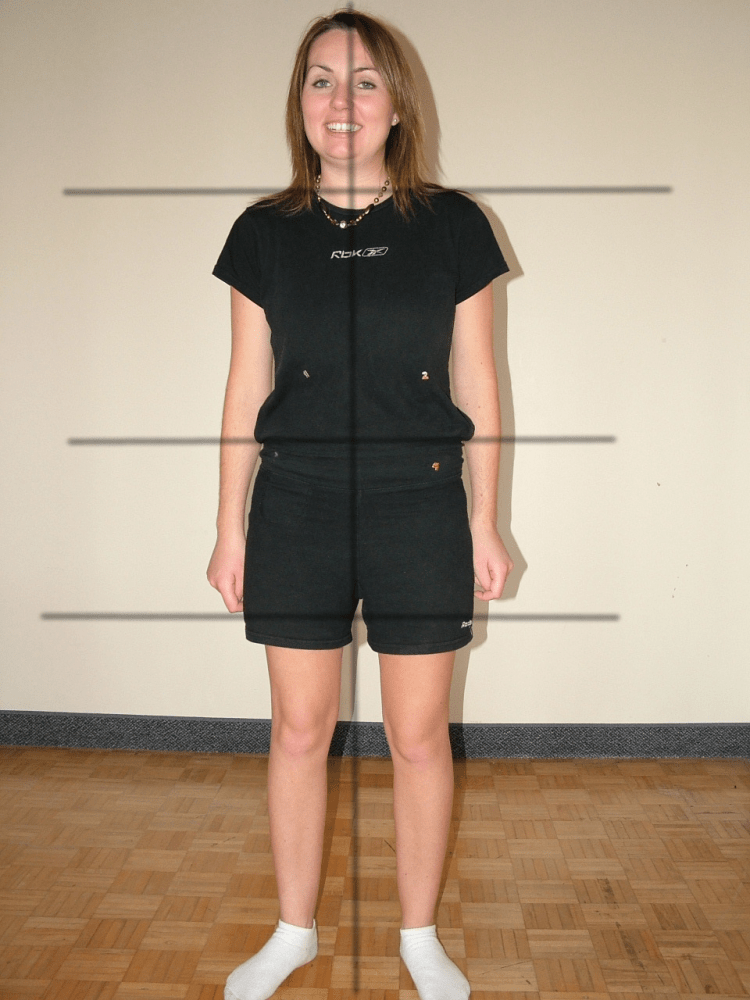
“You’re so good at anatomy,” Zsofia says as she looks at her posture in a mirror.  “I should have taken massage therapy like you did instead of that two weekend personal training course.”

“You were too busy with your Naturopathy course,” Rita replies.  “Draw in your lower abs by your pelvis to stabilize and stretch up.  You have fantastic posture as always.”

“Do you think Mother Earth will ever have perfect posture?”

Rita has to contemplate Zsofia’s question.  She realizes perfect posture represents the melding of nature with technology.  “Mother Earth is always changing, evolving.  Now technology is evolving closer to nature.  Engineers have started experimenting making computer parts with living material.”

“I agree with you, Nature will always find a way to return,” Zsofia says.  “What I’m interested in currently is the reuse of food we all waste at restaurants.”

“That’s true we waste so much of life on our dinner plates,” Rita says as they walk towards the change room.

“There’s some hope there,” Zsofia says with a smile.  “Years ago the Downtown Kitchener Business Improvement Area initiated a pilot program that sends waste food from restaurants to Bio En Power in Elmira.  Bio En Power turns the food waste into biogas that’s used for fertilizer.”

“We still need to decrease the waste.”  Rita opens her designated locker and passes Zsofia her duffel bag.   “Especially meat.  People need to respect that what they are eating used to be alive.”

“Dogs, cats, birds of prey, bears, and numerous other animals and mammals eat meat Rita.”

“I’m not suggesting people stop eating meat just respect it.  Perhaps the custom no longer exists but the Inuit used to pour water from their mouths into the mouth of a seal they killed—in thankfulness for the seal giving up its life.  Every part of the seal was used for either food or clothing.”

“It will be hard not to waste that much food,” Zsofia says as they walk to the parking lot.  “We inspect the food we eat, we choose what we want to eat, and if we’re no longer hungry at a restaurant we either take a doggy bag or it ends up as waste.”

“Someday we’ll just have to accept what’s available instead of demanding that everything be available at all times.”  Rita gives Zsofia a hug.  “I’m looking forward to you doing a guest lecture.”

“Soon,” Zsofia promises.

Rita contemplates their conversation as she watches Zsofia drive away.